
Learning on the go
Doing What Works in Youth Care
- Timeline
- March - may, 2025
- Role
- UX designer
- Read time
- ????
Doing What Works in Youth Care

Dutch youth care workers support children, young people and families through emotional and social challenges. Their work demands trust, clear communication and quick decisions. Busy schedules and stress make it hard to keep learning, even though continuous development is essential for safe and thoughtful care.
In this case study, I explore how learning can fit naturally into their day. My challenge was simple: How can youth care workers learn during their commute or in the short gaps between tasks?
I focused on their routines and created a concept that supports learning without adding extra pressure.
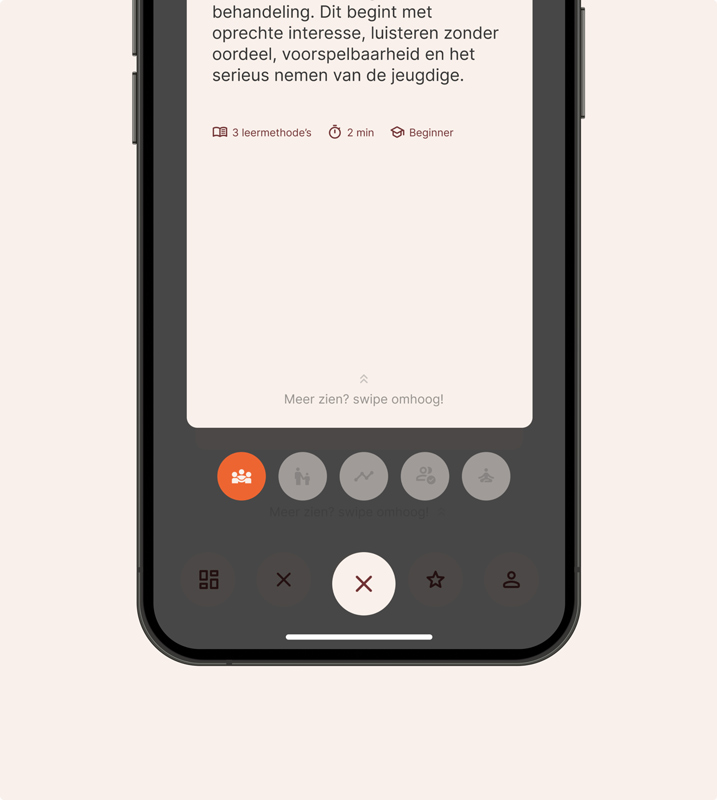
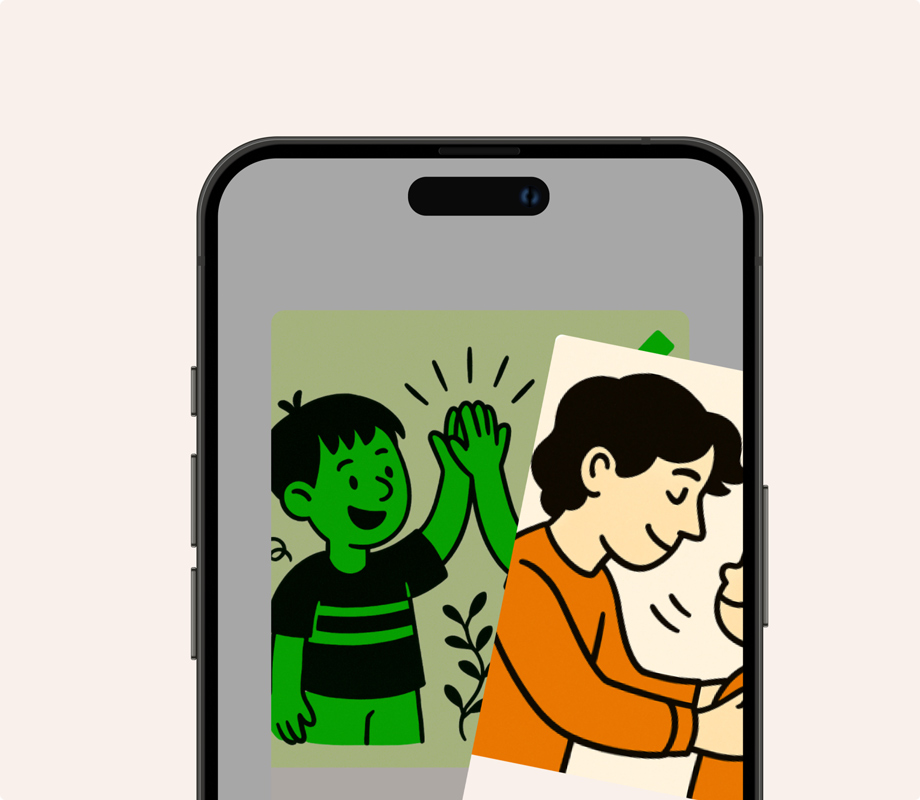
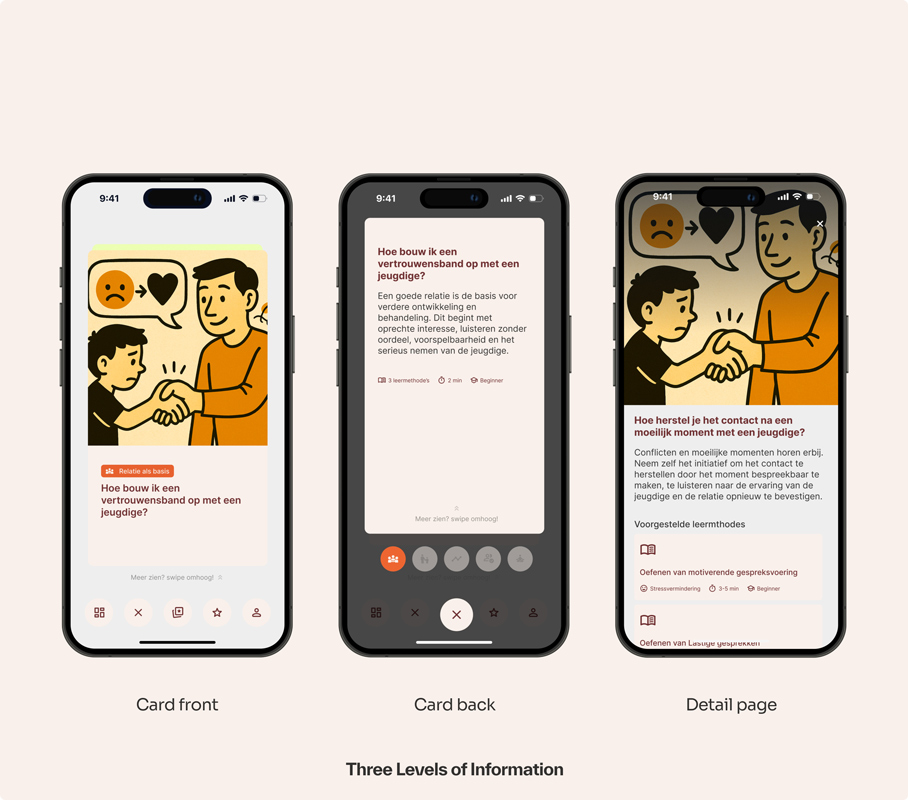
Based on the earlier domain model, I started creating the card deck, which forms a central part of the concept. I applied the Three Levels of Information to structure the content.
Using the provided documents, I designed the first version with an optimistic tone and AI-generated illustrations to make the cards clear and engaging.
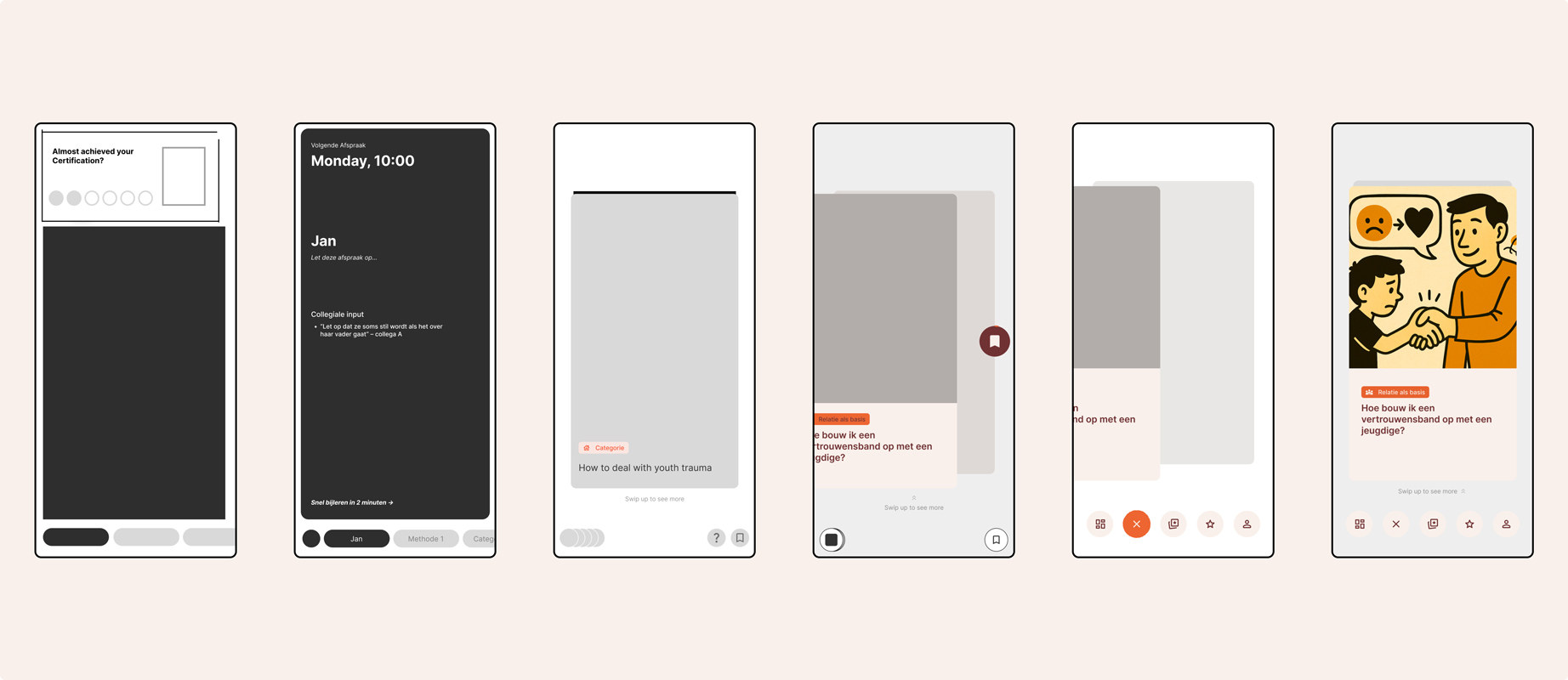
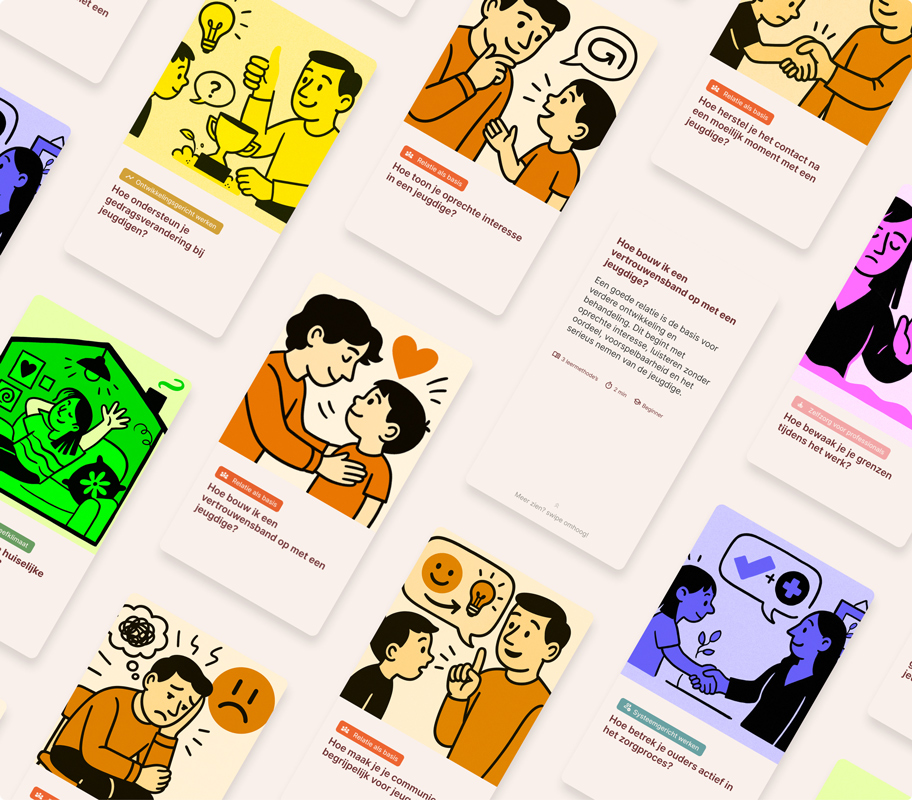
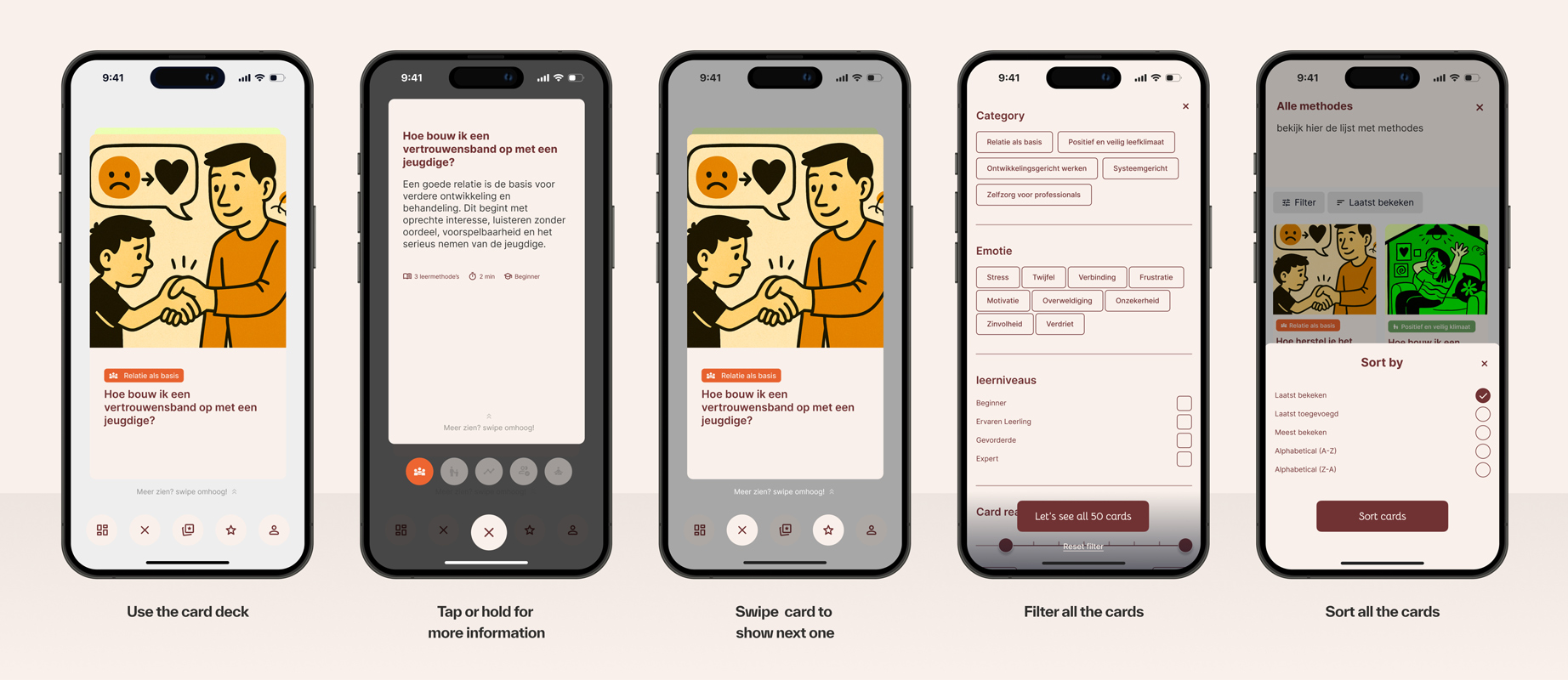
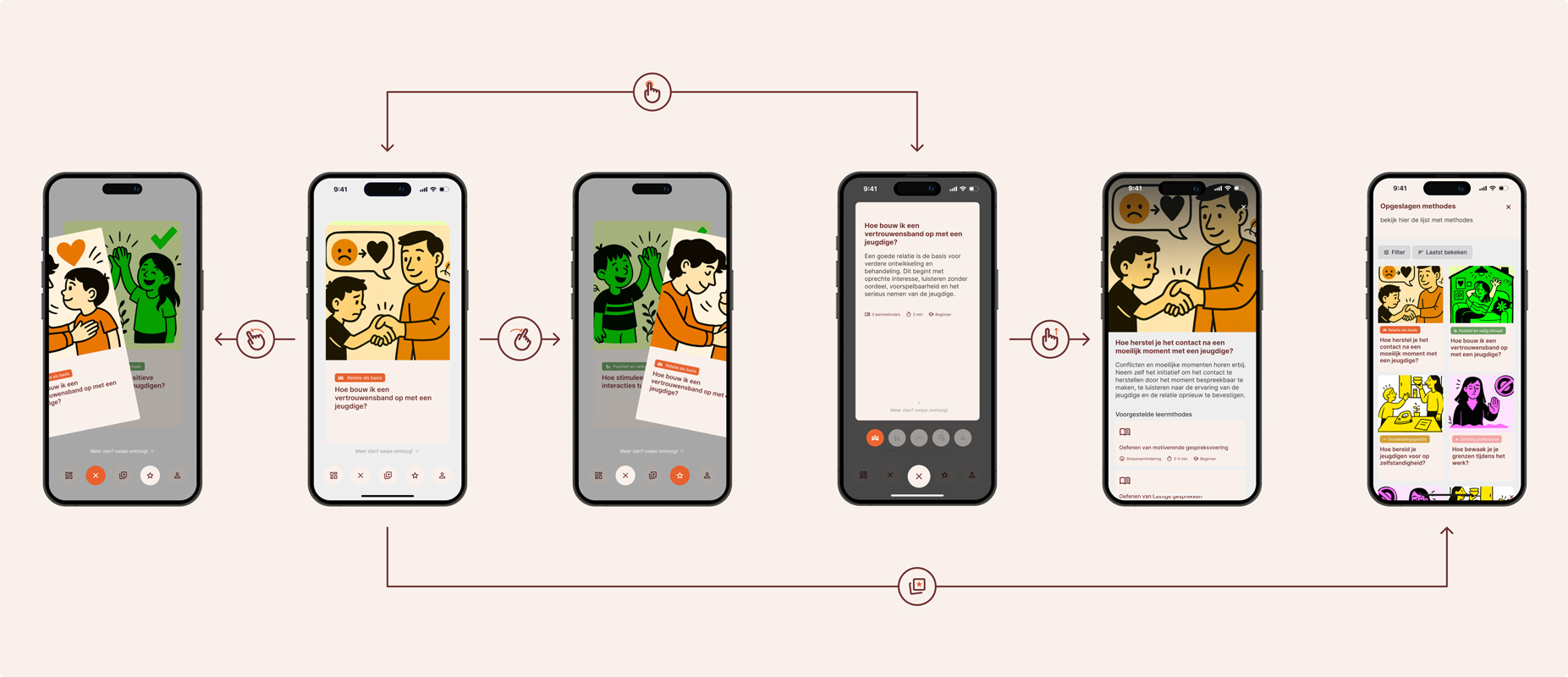
The overall UX strategy for the user flow is linear yet flexible. Users move from exploration → learning more content → execution in real life, with the freedom to choose their focus and pace. To ensure consistency, I applied uniform icons, buttons and layout grids, creating a cohesive experience.
The wireframes feature high contrast and large tap targets, enhancing mobile usability, this easpacily imprtonat ecause a large part of the social workers are of a older age group.
This project taught me how to connect different design methods into one clear and practical process. I began by defining the core problem and analysing when youth care workers actually have space to learn. Instead of designing immediately, I focused on understanding the pain points, which helped me keep the user at the centre throughout the project.
A key learning was how research, structure and interaction can strengthen each other. By combining methods, I developed a good understanding of what users truly need and how the solution should behave in stressful moments.
I have learned as well how to translate complex information into a intuitive flow that remain easy to use.
Working with motion design taught me how transitions can guide attention and make the product feel more intuitive without adding cognitive load. This process helped me grow as a designer who can move from a clear problem definition to a coherent, user-centred solution. I believe the concept can develop even further and become an even more effective tool for youth care workers with more testing and iteration.